
Post-Construction Cleaning Services: DMV Guide
Table of Contents
What Post-Construction Cleaning Services Include
Rough Clean vs. Final Polish
Windows, Glass, and Frames
Floors, Fixtures, and Cabinetry
Post-Construction Cleaning Checklist for Property Managers
Included in a Standard Post-Construction Clean
Usually Excluded or Priced Separately
Acceptance Criteria for the Walkthrough
How to Clean Post-Construction Dust Effectively
Post-Construction Cleaning Cost and Pricing Factors
What Actually Drives the Price
How Quotes Are Usually Structured
Questions That Make Bids Comparable
Budgeting Without a Site Visit
Post-Construction Cleaning Timeline and Project Coordination
Choosing a Reliable Post-Construction Cleaning Provider
Licensing, Insurance, and Bonding
Service Area Coverage Across the Region
Reliability and Communication Standards
Why Professional Post-Construction Cleaning Matters Before Occupancy
Frequently Asked Questions
Last Updated: October 18, 2026
What Post-Construction Cleaning Services Include
Post-construction cleaning services remove the debris, dust, and residue left behind after building or renovation work. This specialized cleaning goes far beyond standard janitorial work, addressing fine construction dust embedded in surfaces, adhesive residue, protective film, and scattered materials.
The scope of post-construction cleaning services unfolds in stages: rough cleaning removes bulk debris, detail cleaning targets surfaces, fixtures, and hard-to-reach areas, and final polish brings everything to inspection-ready condition.
Rough Clean vs. Final Polish
Rough cleaning is the initial heavy-duty phase immediately after major construction ends. Crews remove drywall dust, sawdust, packaging, protective coverings, and bulk debris using industrial HEPA vacuums, brooms, and basic surface wiping.
Final polish is the detailed finishing work: dusting all surfaces, cleaning light fixtures and outlets, polishing windows and mirrors, wiping cabinetry and trim, and mopping floors. This phase determines whether a property looks merely cleared or genuinely ready for occupancy and inspection.
Windows, Glass, and Frames
Construction leaves windows and glass soiled with dust, protective film residue, paint overspray, and adhesive. Professional post-construction cleaning removes it without damaging frames or seals, cleaning interior and exterior glass, removing film carefully, and polishing frames to like-new condition.
Improper techniques can scratch glass or leave streaks obvious under inspection lighting. The goal is crystal-clear glass that looks untouched by construction.
Floors, Fixtures, and Cabinetry
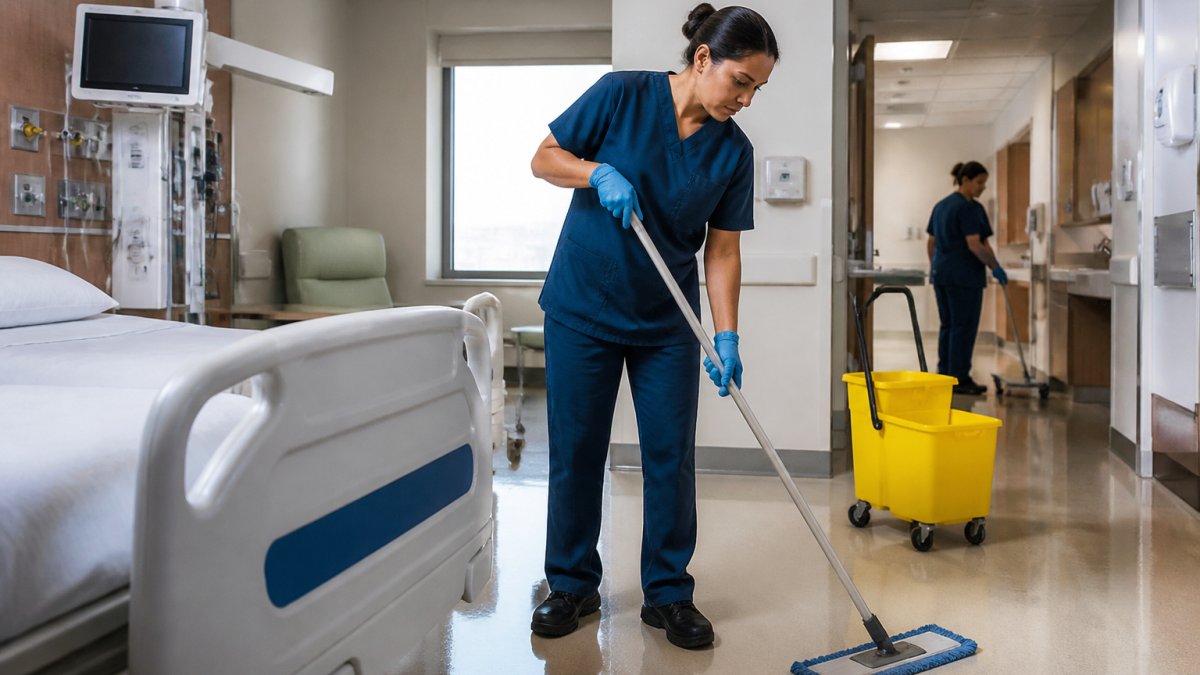
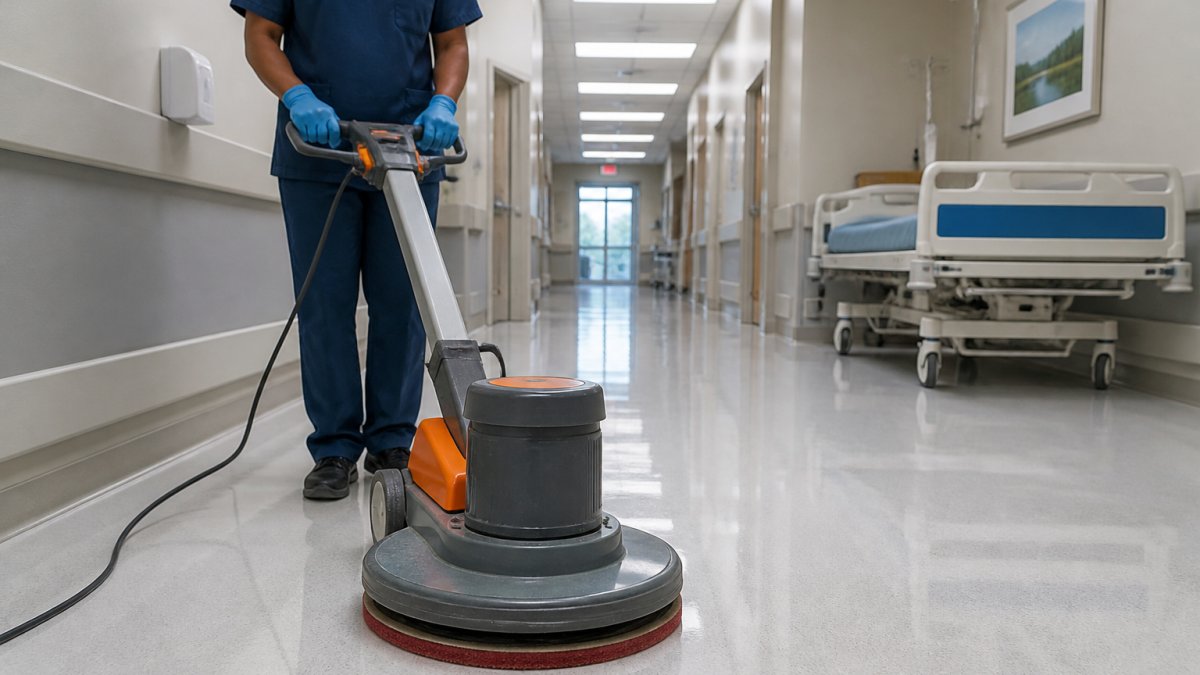
Floors accumulate the heaviest residue: dust in grout lines, adhesive on tile, coating residue, and particles trapped in carpet fibers. Cleaning involves HEPA vacuuming, scrubbing grout, removing adhesive, and mopping or polishing by floor type, with material-matched methods for specialty flooring like polished concrete or sealed wood.
Fixtures, faucets, switches, outlet covers, and door handles collect dust that makes spaces feel unfinished, and cabinetry needs careful wiping inside shelves, hardware, and surfaces. Inspectors and new occupants notice these details immediately.
Post-Construction Cleaning Checklist for Property Managers
A good checklist tells the crew exactly what "done" looks like and gives the property manager a defensible basis for accepting or rejecting the work. This version separates a standard post-construction clean from work usually scoped or priced separately.
Included in a Standard Post-Construction Clean
Whole-building prep
Remove protective coverings, tape, corner guards, and floor protection.
Remove temporary signage and construction markings from glass and doors where safe to do so.
Confirm water and power are live before wet cleaning begins.
Ceilings, walls, and overhead
HEPA-vacuum and damp-wipe ceilings, corners, and wall surfaces.
Wipe light fixtures, diffusers, and outlet and switch plates.
Vacuum and wipe HVAC vents and returns at the grille; duct interiors are a separate scope.
Glass and frames
Clean interior glass, frames, sills, and tracks.
Remove protective film and adhesive residue from glass where the film is designed to be removed by the cleaning stage.
Clean exterior glass on accessible ground-level and reachable surfaces; exterior glass above reach is typically a separate scope.
Floors
HEPA-vacuum all floor surfaces, including corners and edges.
Remove adhesive, thinset haze, and protective coating residue appropriate to the material.
Mop, scrub, or polish according to the finish; specialty stone and sealed wood may require a material-specific protocol.
Kitchens and bathrooms
Wipe and polish fixtures, faucets, sinks, and hardware.
Clean and disinfect counters, backsplashes, and cabinet exteriors.
Clean inside cabinetry and drawers where specified.
Fixtures and hardware
Wipe door handles, push plates, railings, and switch plates.
Dust and wipe shelving, millwork, and trim.
Spot-clean fingerprints and smudges on painted surfaces.
Final walkthrough
Conduct a room-by-room inspection under the lighting the space will actually use.
Re-clean any area that fails the acceptance criteria below before sign-off.
Usually Excluded or Priced Separately
Hazardous materials. Asbestos, lead paint dust, mold, and biohazard cleanup require licensed abatement contractors, not general cleaning crews.
Construction debris hauling and disposal. Dumpster placement, dump fees, and bulk debris removal are typically a separate line item.
HVAC duct interiors. Grille and register cleaning is standard; duct interior cleaning is a specialty service.
Acceptance Criteria for the Walkthrough
Define "clean" before the crew arrives so the walkthrough is a verification, not a negotiation:
No visible dust on horizontal surfaces when wiped with a white cloth.
No streaks, film, or adhesive residue on glass when viewed at an angle.
No visible debris, adhesive, or haze on floors, including corners and edges.
Watch Out If a provider cannot clearly explain their process, insurance coverage, or crew qualifications, find another option. Post-construction cleaning is too important to your project timeline to trust unclear or evasive providers.

How to Clean Post-Construction Dust Effectively
Construction dust is finer and more persistent than household dust, settling into crevices and circulating through HVAC systems if not contained.
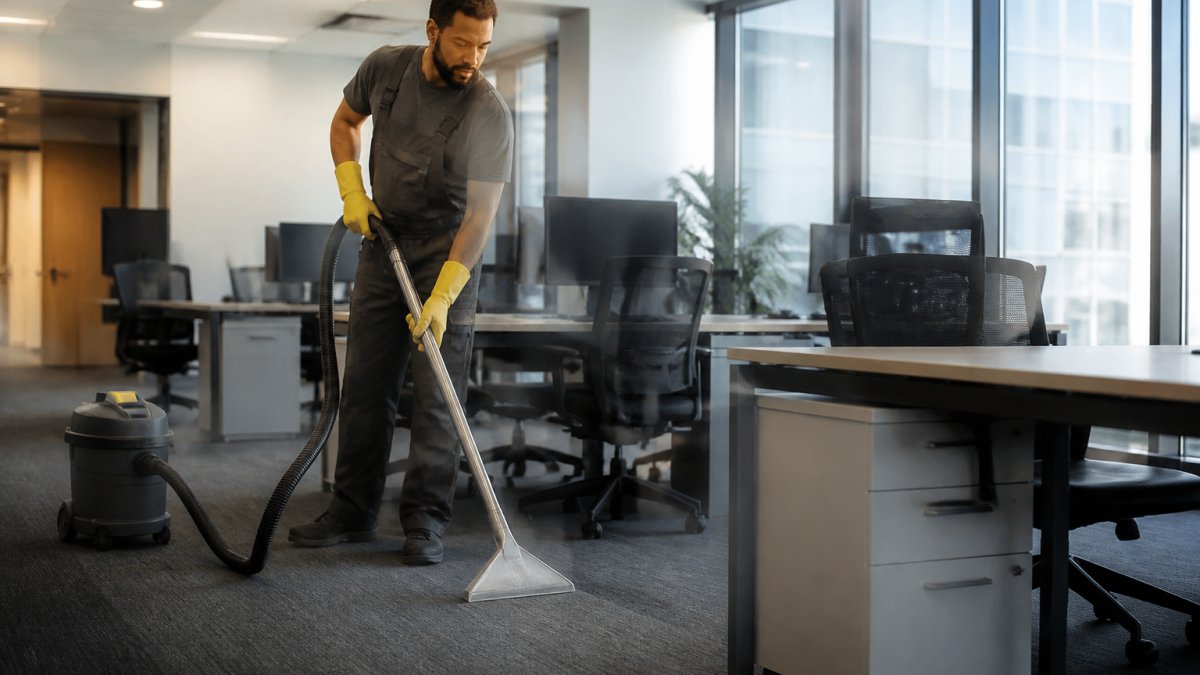
Start with HEPA-filtered vacuuming to capture airborne particles before they resettle; standard vacuums recirculate fine dust, while HEPA traps particles down to 0.3 microns.
Sealed surfaces like polished concrete or tile need different techniques than porous materials, and grout lines and textured surfaces trap dust requiring scrubbing or specialized extraction.
Post-Construction Cleaning Cost and Pricing Factors
Most post-construction cleaning quotes are built from a handful of inputs, not a single advertised rate. Understanding them is the fastest way to compare bids and spot one that's cheap because it quietly excludes half the scope.
What Actually Drives the Price
Square footage and ceiling height. Cleanable surface area, not floor area, sets crew hours. A 5,000 sq ft open office with 10-foot ceilings differs from the same footprint split into small rooms with 14-foot ceilings, since wall, fixture, and overhead surface area multiplies.
Construction stage and residue type. A light tenant improvement with painted walls and new carpet needs far less labor than a full gut renovation with drywall dust everywhere, adhesive on tile, and paint overspray on glass. Rough cleanup after framing is priced differently from a final clean before punch-list walkthrough.
Debris volume and haul-off. Cleaning crews remove dust and light debris. Construction debris hauling, dumpster placement, and disposal fees are usually a separate line item or contractor. Confirm in writing whether debris removal is included or excluded.
How Quotes Are Usually Structured
Providers typically price three ways: a flat project quote after a walkthrough, a per-square-foot rate adjusted for condition, or time-and-materials with a crew-hour cap. Flat quotes are most comparable because they force a scope commitment. Per-square-foot rates vary widely with condition, so ask what tier the rate assumes. Time-and-materials shifts risk to the owner and should include a not-to-exceed figure.
Questions That Make Bids Comparable
Ask every provider the same set of questions so the numbers line up:
Which cleaning stages are included, and how many site visits does the price cover?
Is debris haul-off included, and if not, who is responsible for disposal?
Are windows cleaned on both interior and exterior faces, and is protective film removal included?
Are HVAC vents, returns, and light fixtures wiped as part of the scope?
What is the assumed condition tier, and what triggers a change order?
What is the crew size and estimated duration, and does the price include supervision?
What are the payment terms, and is there a retainage or final-walkthrough holdback?
A quote that can't answer these questions is a placeholder, and the lowest number is frequently the one with the most exclusions buried in the fine print.
Pro Tip Request quotes from multiple providers and verify they're evaluating the same scope of work. Unusually low quotes often mean incomplete cleaning or lower-quality equipment. The most expensive option isn't always best, but the cheapest option frequently delivers disappointing results.
Budgeting Without a Site Visit
If you need a planning number before a walkthrough, budget from crew hours rather than a headline rate: estimate cleanable square footage, multiply by a condition factor for light, medium, or heavy residue, and add hours for glass, fixtures, and specialty finishes. Treat any phone quote without a site visit as a range, and ask the provider to confirm assumptions in writing before you sign.
Post-Construction Cleaning Timeline and Project Coordination
Timelines depend on property size, construction complexity, and crew count: a small office renovation might take one intensive day, while a multi-story new build might need several days with multiple crews.
Scheduling typically happens after construction substantially completes but before final inspections, a tight window since inspections are booked weeks ahead and can't be postponed.
Property managers should confirm exactly when work starts, how long it takes, and what access is needed.
Choosing a Reliable Post-Construction Cleaning Provider
Selecting a provider requires evaluating more than price. The best combine quality execution with reliability and clear communication, the factors that matter most when your opening date is at stake.
Licensing, Insurance, and Bonding
Legitimate providers carry liability insurance and bonding: insurance protects you if equipment damages the property or a crew member is injured, and bonding ensures recourse if the provider fails to complete the work.
Verify workers' compensation coverage for all crew members to protect yourself from liability if an employee is injured. Legitimate providers willingly share documentation; those who resist are red flags.
Service Area Coverage Across the Region
Reliable providers clearly define their service area and maintain consistent quality throughout. Some claim to serve the entire region but subcontract work to less-qualified crews in distant areas, so ask specifically whether the provider's own crews will handle your project.
Phaze 2 Janitorial & Labor Services maintains direct control over crew quality and scheduling across our service area, so you get the same professional standard whether your property is in the city or suburbs.
Reliability and Communication Standards
The provider's responsiveness to initial inquiries predicts how they'll communicate during the actual project. Do they return calls promptly, answer questions thoroughly, and follow up after quotes?
Ask for references from recent projects, specifically from property managers who had tight occupancy deadlines. Their feedback on whether crews showed up on schedule, completed work as promised, and communicated proactively matters more than generic testimonials.
Why Professional Post-Construction Cleaning Matters Before Occupancy
The financial impact of incomplete cleaning extends beyond aesthetics.
Inspection readiness is non-negotiable for occupancy approval. Inspectors specifically evaluate cleanliness as part of final sign-off.
Post-construction cleaning transforms a construction site into an occupancy-ready facility, but only when executed by experienced crews using proper equipment and systematic processes.
At Phaze 2 Janitorial & Labor Services, we specialize in post-construction cleaning that addresses the specific challenges of new builds and renovations across the region.
Frequently Asked Questions
What does a post-construction cleaning checklist typically include?
A comprehensive post-construction cleaning checklist covers dust removal from all surfaces, window and glass cleaning, floor cleaning and residue removal, fixture and cabinet wiping, and final touch-ups. The scope depends on whether the cleaning is rough (early-stage debris removal) or final polish (move-in ready). Professional providers follow a three-stage process: initial debris removal, detail cleaning of surfaces and fixtures, and final inspection to ensure the space meets occupancy standards.
How long does post-construction cleaning typically take?
Post-construction cleaning timeline varies based on property size, project scope, and the extent of dust and debris. Smaller commercial spaces may take 1-3 days, while larger buildings or extensive renovations can require 1-2 weeks. Scheduling also depends on construction completion timing and occupancy deadlines. Professional providers coordinate with contractors and property managers to minimize delays and ensure the space is inspection-ready on schedule.
How much does post-construction cleaning cost?
Post-construction cleaning cost depends on several factors: square footage, project scope (rough vs. final clean), debris volume, flooring type, and regional labor rates. Quote-based pricing is standard because no two projects are identical. Request a detailed estimate that outlines specific tasks, exclusions, and any add-ons. Transparent pricing helps you understand where your investment goes and avoid surprise charges after the job begins.
What's the difference between rough cleaning and final polish in post-construction work?
Rough cleaning happens early in the project and removes bulk construction debris, dust, and protective coverings. Final polish occurs after rough cleaning and prepares the space for occupancy by addressing fine dust, cleaning fixtures, polishing surfaces, and ensuring every detail meets inspection standards. Most projects require both phases to achieve an occupancy-ready facility.
How do professionals remove fine construction dust from newly finished spaces?
Professionals use industrial-grade equipment and techniques to capture and remove fine dust without spreading it to finished areas. This includes HEPA-filtered vacuums, damp wiping of surfaces to prevent dust resuspension, proper containment methods, and systematic top-to-bottom cleaning. Trained crews understand how to handle different materials, drywall dust, concrete residue, and paint overspray, each requiring specific removal methods to protect newly installed finishes.
Request a Quote
Comments