
Maintaining Commercial Floors in Healthcare Facilities
Table of Contents
Why Floor Maintenance Matters in Healthcare Settings
Hospital Floor Cleaning Procedures: Daily and Deep Cleaning
Daily Routine Cleaning and Traffic Management
Deep Cleaning and Restorative Maintenance
Healthcare Facility Floor Maintenance Schedule
Room-by-Room Maintenance Protocols
Seasonal and Lifecycle Maintenance Intervals
Healthcare Flooring Infection Control Standards
Disinfection Protocols and Chemical Dwell Times
Surface Design for Infection Prevention
Selecting and Using Healthcare Floor Care Equipment
Equipment for Different Flooring Types
Cleaning Product Compatibility and Safety
Flooring Selection and Durability in High-Traffic Areas
Hard Floors vs. Resilient Flooring
Slip Resistance and Fall Prevention
Common Mistakes and How to Avoid Them
Measuring Maintenance Performance and Total Cost of Ownership
Frequently Asked Questions
Last Updated: October 17, 2026
Why Floor Maintenance Matters in Healthcare Settings
Healthcare flooring challenges are unique: patient safety, infection control, and regulatory compliance all depend on floor maintenance. Slippery surfaces cause falls, contaminated flooring spreads pathogens, and damaged floors create liability.
Maintaining commercial floors in healthcare facilities requires a clear protocol, the right equipment, and consistency.
This guide covers daily routines, deep maintenance cycles, infection control standards, equipment, durability, and costly mistakes, whether you manage a small clinic or a large hospital system.
Key Takeaway Floor maintenance in healthcare is both a safety issue and a financial one. Preventive care costs far less than emergency repairs or compliance violations.
Hospital Floor Cleaning Procedures: Daily and Deep Cleaning
Daily Routine Cleaning and Traffic Management
Daily cleaning must balance thoroughness with operational flow, staff need patient care access while you control foot traffic and contamination.

Start each day with a clear protocol: identify high-traffic zones (entrances, hallways, break rooms), sequence cleaning so it doesn't block critical pathways, and use wet-floor signage strategically.
The process matters as much as frequency.
Traffic management is often overlooked. Cordon off cleaned areas with proper signage, and time cleaning for low-traffic periods, early morning before patient arrivals and late evening after visiting hours.
Watch Out Leaving wet floors unattended is a liability risk in any facility, but in healthcare it's especially serious. Patient mobility varies widely, some use walkers, wheelchairs, or canes. A slippery floor that might be manageable for a healthy adult can cause a serious fall for an elderly or mobility-impaired patient.
Deep Cleaning and Restorative Maintenance
Deep cleaning removes what daily cleaning cannot: buildup in grout lines, under furniture, along baseboards, and in corners where microbes and soil accumulate.
For hard floors, scrub with a rotary or orbital machine and soft brush; for resilient flooring like vinyl or luxury vinyl tile, use a lower-speed machine to avoid damage.
Restorative maintenance goes further: stripping old finish, resealing, and applying fresh wax or coatings, typically annually or every 18 months depending on traffic.
Pro Tip Schedule deep cleaning and restorative work during low-occupancy periods or after hours. In hospitals, this often means weekend work or night shifts. The disruption is temporary, but the results extend floor lifespan significantly, sometimes by years.
Healthcare Facility Floor Maintenance Schedule
Room-by-Room Maintenance Protocols
Different areas need different protocols. A room-by-room schedule ensures nothing falls through the cracks.
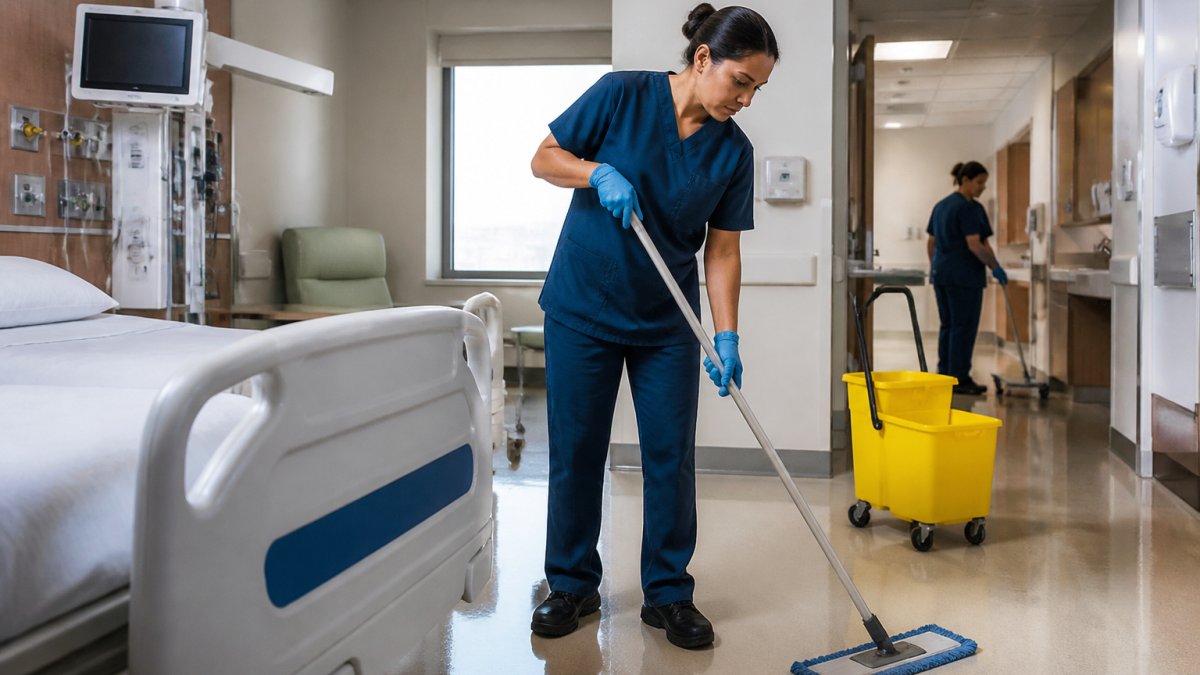
Patient rooms and corridors: daily cleaning with appropriate disinfectants, focusing on high-touch surfaces and floors; change protocols for known infections.
Bathrooms: daily cleaning and disinfection with products rated for bathroom use and proper ventilation.
Dietary and food service areas: daily cleaning with food-safe protocols meeting health code standards.
Create a written schedule, assign responsibility, and track completion.
Seasonal and Lifecycle Maintenance Intervals
Beyond daily and monthly cleaning, facilities need seasonal maintenance and long-term planning.
Every 12-18 months, plan restorative maintenance: stripping and waxing hard floors, resealing resilient flooring, and applying fresh coatings. High-traffic areas may need annual restoration; lower-traffic areas might go 24 months.
Every 3-5 years, evaluate flooring condition comprehensively, are certain areas wearing faster than expected, and is the current flooring type meeting your needs? Plan repairs or replacement now to prevent emergencies and keep budgets predictable.
Healthcare Flooring Infection Control Standards
Disinfection Protocols and Chemical Dwell Times
Infection prevention is non-negotiable in healthcare. Your floor maintenance directly impacts this. The right disinfectant, applied correctly, kills pathogens. The wrong approach leaves contamination behind.
Most facilities use EPA-registered disinfectants with specific instructions for dilution ratios, contact time (dwell time), and surface types.
Create a protocol that specifies which disinfectant to use in each area, the proper dilution, and the required dwell time. According to CDC infection prevention guidelines, proper disinfection of environmental surfaces is a core component of healthcare-associated infection prevention.
Match product and protocol to risk level: operating rooms need the strongest disinfectants and longest dwell times, patient rooms need hospital-grade disinfection, and common areas can use standard hospital disinfectants.
Watch Out Using the wrong disinfectant or failing to allow proper dwell time defeats the purpose. A disinfectant that requires 10 minutes of contact won't work if your staff wipes it dry in 30 seconds. Train your team on why these protocols matter, not just what to do.
Surface Design for Infection Prevention
Flooring design affects infection control: seamless, nonporous surfaces are easier to disinfect than porous or textured floors, and grout lines, cracks, and seams harbor pathogens.
Avoid porous materials in high-contamination areas, carpet is difficult to disinfect and shouldn't be used in clinical spaces.
Transitions matter too: gaps and edges trap soil and pathogens, so use proper transition strips and seal edges to prevent contamination from accumulating in hard-to-clean areas.
Selecting and Using Healthcare Floor Care Equipment
Equipment for Different Flooring Types
The right equipment protects your floors and improves cleaning efficiency. Different flooring types require different tools.
Microfiber mops and dust mops are essential for daily cleaning, they capture more soil and pathogens than cotton, and are more durable and cost-effective over time.
Investing in quality equipment pays off: it lasts longer, works more efficiently, and produces better results, while reducing staff fatigue and improving consistency.
Cleaning Product Compatibility and Safety
Not all cleaning products work with all flooring types. Some can damage seals, dull finishes, or leave residue. Compatibility matters.
Before using any new product, test it on a small, inconspicuous area. Check the manufacturer's recommendations for your specific flooring.
Chemical compatibility also affects dwell time and efficacy.
Safety is paramount. According to OSHA guidelines on healthcare worker safety, proper handling of cleaning chemicals is a workplace safety requirement.
Flooring Selection and Durability in High-Traffic Areas
Hard Floors vs. Resilient Flooring
Choosing the right flooring type for your healthcare facility is a long-term decision that affects maintenance costs, durability, and infection control.
Hard floors (tile, polished concrete, sealed stone) offer excellent durability and easy disinfection, nonporous, stain-resistant, and able to withstand heavy traffic and frequent cleaning.
For clinical areas where infection control is critical, hard floors or seamless epoxy are better choices.
Consider traffic patterns when selecting flooring. High-traffic corridors and entrances wear faster. Choose durable materials for these zones. Lower-traffic areas can use less expensive options.
Best For Hard floors or seamless epoxy work best for operating rooms, patient care units, and isolation rooms. Resilient flooring suits administrative offices, staff lounges, and lower-traffic areas.
Slip Resistance and Fall Prevention
Slip resistance is a safety issue. Wet floors are slippery. Polished hard floors without proper texture can be dangerous.
When selecting flooring, check the coefficient of friction (COF) rating, higher COF means more slip resistance.
Maintenance affects slip resistance. Over-buffed waxed floors become shiny and slippery, and dirty floors can be slippery too.
Textured flooring options provide better slip resistance than smooth surfaces. Some hard tiles have textured finishes. Some resilient products have embossed patterns.
Fall prevention extends beyond flooring. According to CDC guidance on fall prevention in healthcare, environmental design including flooring choices is a key component of fall prevention programs.
Common Mistakes and How to Avoid Them
Most floor maintenance problems stem from a few common mistakes. Recognizing these prevents costly damage.
Mistake 3: Inadequate dwell time for disinfectants. Spraying and immediately wiping doesn't kill pathogens.
Mistake 5: Skipping restorative maintenance. Waiting until floors look terrible before doing restoration is more expensive than preventive maintenance.
Mistake 6: Ignoring damage. Small cracks or peeling spread quickly. Addressing problems early prevents larger repairs. Fix: Inspect floors regularly.
Measuring Maintenance Performance and Total Cost of Ownership
You can't improve what you don't measure. Tracking floor maintenance performance helps you identify what's working and what isn't.
Key metrics to track:
Cleaning frequency compliance (percentage of scheduled cleanings completed)
Staff injury rates related to slips or falls
Infection rates in clinical areas (in collaboration with infection prevention teams)
Floor condition assessments (visual ratings of appearance and wear)
Equipment downtime (how often equipment is unavailable)
Cost per square foot per year for maintenance
Regular inspections provide data. Walk your facility monthly. Document floor condition. Take photos of problem areas. Track repairs and costs.
Total cost of ownership includes more than cleaning labor. It includes equipment, products, repairs, and eventual replacement.
When evaluating maintaining commercial floors in healthcare facilities, consider the full lifecycle.
Maintaining commercial floors in healthcare facilities requires planning, consistency, and the right approach. When you need expert support with specialized floor care, infection control protocols, or comprehensive facility maintenance, Phaze 2 Janitorial & Labor Services brings trained staff, proven procedures, and the reliability facility managers depend on. Request a quote to discuss your specific needs and how we can help extend your floor lifespan while maintaining the highest standards.
Maintenance Task | Frequency | Purpose | Key Consideration |
Daily cleaning (high-traffic areas) | 1-3 times daily | Remove soil, contamination, slip hazards | Time around operations to minimize disruption |
Daily cleaning (low-traffic areas) | Once daily | Maintain appearance, prevent buildup | Lower priority than clinical areas |
Deep cleaning | Monthly or quarterly | Remove embedded soil, refresh appearance | Adjust frequency based on traffic and contamination risk |
Disinfection (clinical areas) | Per protocol | Kill pathogens, meet infection control standards | Follow dwell times; don't rush the process |
Restorative maintenance (strip and wax) | Annually or every 18 months | Restore finish, extend floor lifespan | Schedule during low-occupancy periods |
Comprehensive floor assessment | Annually | Identify damage, plan repairs, budget for replacement | Document condition with photos and notes |
Frequently Asked Questions
How often should floors be cleaned in a healthcare facility?
High-traffic areas like corridors and patient rooms require daily cleaning, often multiple times per day. Patient care areas need terminal cleaning between occupants. Operating rooms and intensive care units demand specialized disinfection protocols. Lower-traffic administrative areas may need cleaning 2-3 times weekly. Frequency depends on foot traffic, patient census, and infection control standards specific to each facility zone.
What hospital floor cleaning procedures prevent infection transmission?
Hospital floor cleaning procedures must include proper disinfection with EPA-registered products applied at manufacturer-specified dwell times. Use microfiber mops that trap pathogens rather than spreading them. Clean from cleanest to dirtiest areas. Allow adequate contact time for disinfectants, typically 10 minutes for most hospital-grade products. Terminal cleaning between patients requires documented protocols. Ensure staff are trained on proper technique and personal protective equipment use.
Which cleaning products are safe for healthcare flooring?
Use EPA-registered hospital disinfectants compatible with your specific flooring type. Hard floors tolerate stronger alkaline cleaners, while luxury vinyl and resilient flooring need pH-neutral products to prevent damage. Avoid bleach-based cleaners on most commercial floors unless specifically approved. Verify product compatibility before use. Check safety data sheets for contact times, dilution ratios, and ventilation requirements. Many healthcare facilities require products on approved vendor lists that meet infection control and environmental standards.
What is the best healthcare facility floor maintenance schedule?
A comprehensive healthcare facility floor maintenance schedule includes daily routine cleaning, weekly deep cleaning in patient areas, monthly stripping and waxing for hard floors (or as needed based on traffic), and quarterly burnishing to restore finish. Operating rooms and sterile areas follow stricter protocols. Administrative spaces require less frequent deep cleaning. Seasonal maintenance addresses weather-related debris and moisture. Tailor schedules to your specific flooring type, traffic patterns, and regulatory requirements.
How can healthcare facilities prevent slips and falls on floors?
Select flooring with slip resistance ratings appropriate for wet areas. Maintain proper floor finish and avoid over-waxing, which reduces traction. Clean spills immediately and use caution signs. Ensure adequate lighting in corridors and patient rooms. Install handrails in high-risk areas. Train staff on proper cleaning techniques that don't create slippery surfaces. Use non-slip mats in bathrooms and wet areas. Regular maintenance of floor seals and finishes prevents deterioration that increases fall risk.
What types of flooring work best in hospitals?
Hard floors like polished concrete and epoxy offer durability and easy disinfection in high-traffic areas. Luxury vinyl tile and luxury vinyl plank provide water resistance and comfort underfoot. Seamless flooring eliminates crevices where pathogens hide. Resilient flooring reduces noise and fatigue for staff. Choose based on traffic levels, moisture exposure, and infection control needs. Operating rooms often use epoxy or specialized seamless flooring. Patient rooms may use resilient options for comfort. Each area requires different maintenance approaches.
What equipment is needed for healthcare floor care?
Healthcare floor care equipment includes microfiber mops and mop systems that don't spread pathogens, HEPA-filter vacuums for dust control, low-speed burnishers for floor finish restoration, and auto-scrubbers for large areas. Use equipment appropriate to your flooring type, hard floors require different machines than resilient surfaces. Ensure all equipment meets infection control standards and is properly maintained and sanitized between uses to prevent cross-contamination.
Request a Quote
Comments