
Janitorial Services for Commercial Office Buildings
Table of Contents
What Janitorial Services for Commercial Office Buildings Include
Routine Daily and Weekly Tasks
Specialized Services and Deep Cleaning
Commercial Cleaning Service Frequency: Finding Your Optimal Schedule
Office Cleaning Checklist for Facility Managers
Understanding Office Cleaning Cost Per Square Foot
The Four Cost Drivers That Move the Number
A Simple Way to Sanity-Check a Quote
Compare Itemized Quotes, Not Bottom Lines
Janitorial Services Contract: Key Terms and Quality Assurance
Service-Level Agreements and Accountability
Inspection Cadence and Escalation
Insurance, Bonding, and Compliance Requirements
Contract Terms Worth Negotiating
How to Evaluate and Select a Commercial Cleaning Provider
Green Cleaning and Product Safety in Commercial Facilities
Frequently Asked Questions
Last Updated: October 16, 2026
What Janitorial Services for Commercial Office Buildings Include
Janitorial services for commercial office buildings go far beyond emptying trash and sweeping floors. At Phaze 2 Janitorial & Labor Services, we know a well-maintained facility shapes how clients, employees, and visitors perceive your business. The scope spans routine daily upkeep, specialized deep cleaning, and facility-specific protocols that keep your commercial properties inspection-ready year-round.
Routine Daily and Weekly Tasks
Daily janitorial work is the backbone of facility maintenance, keeping your office clean, safe, and professional between deep-cleaning cycles.
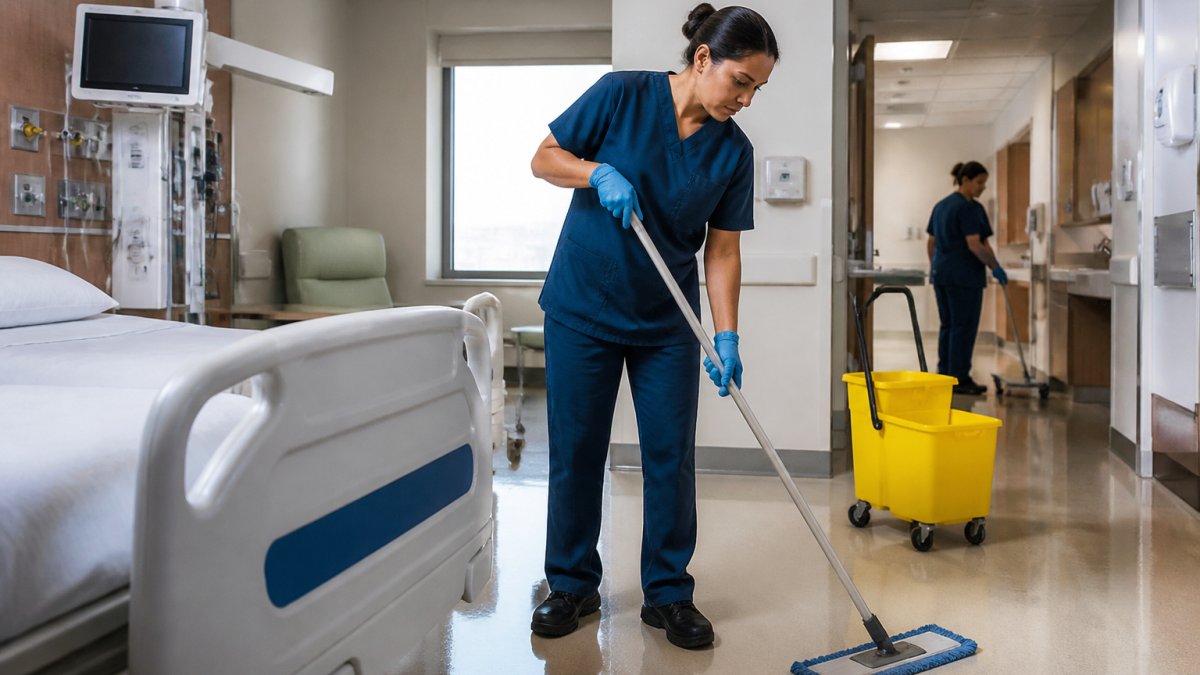
Standard daily duties include emptying waste receptacles, wiping high-touch surfaces like door handles and light switches, vacuuming common areas and workstations, and restocking restroom supplies.
Frequency and scope depend on facility size, occupancy, and industry. A healthcare facility needs different sanitizing protocols than a tech startup, yet both need consistent, reliable service. Trained crews understand these distinctions and adjust accordingly.
Pro Tip Request your janitorial service provider's standard operating procedures in writing. This ensures every visit follows the same quality standards, eliminating surprises and inconsistency.
Specialized Services and Deep Cleaning
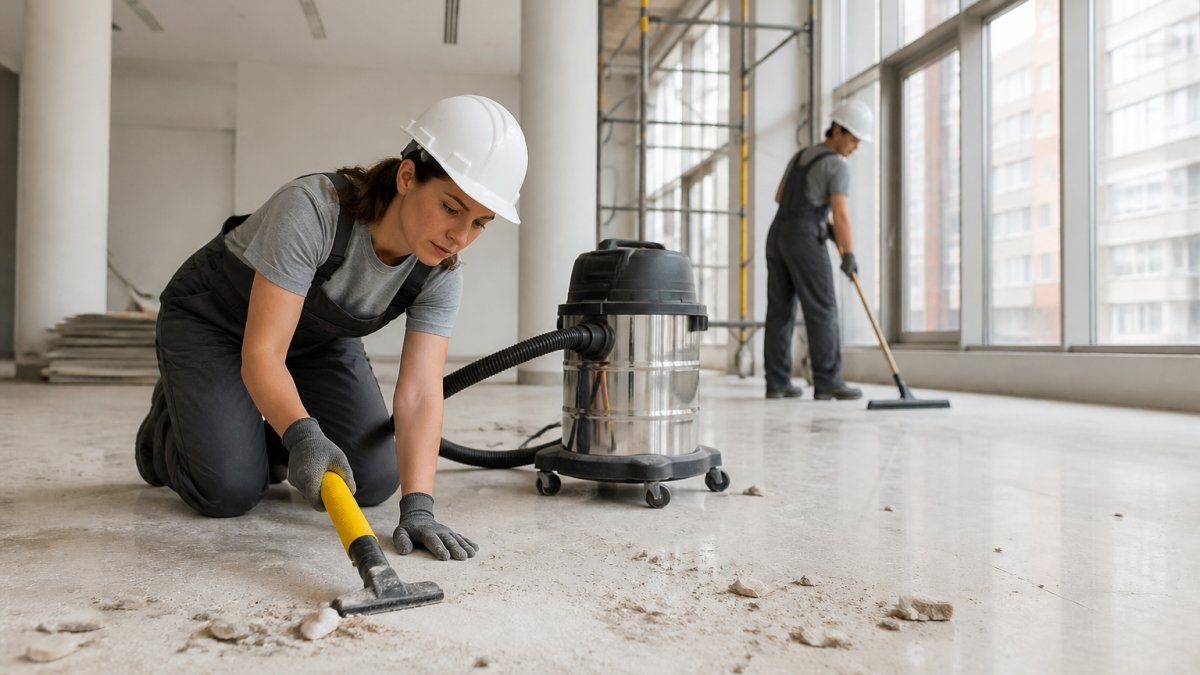
Beyond routine maintenance, commercial facilities often need specialized cleaning. Post-construction cleanup is critical: construction dust settles on every surface, and incomplete cleanup can damage flooring, delay inspections, and create safety hazards.
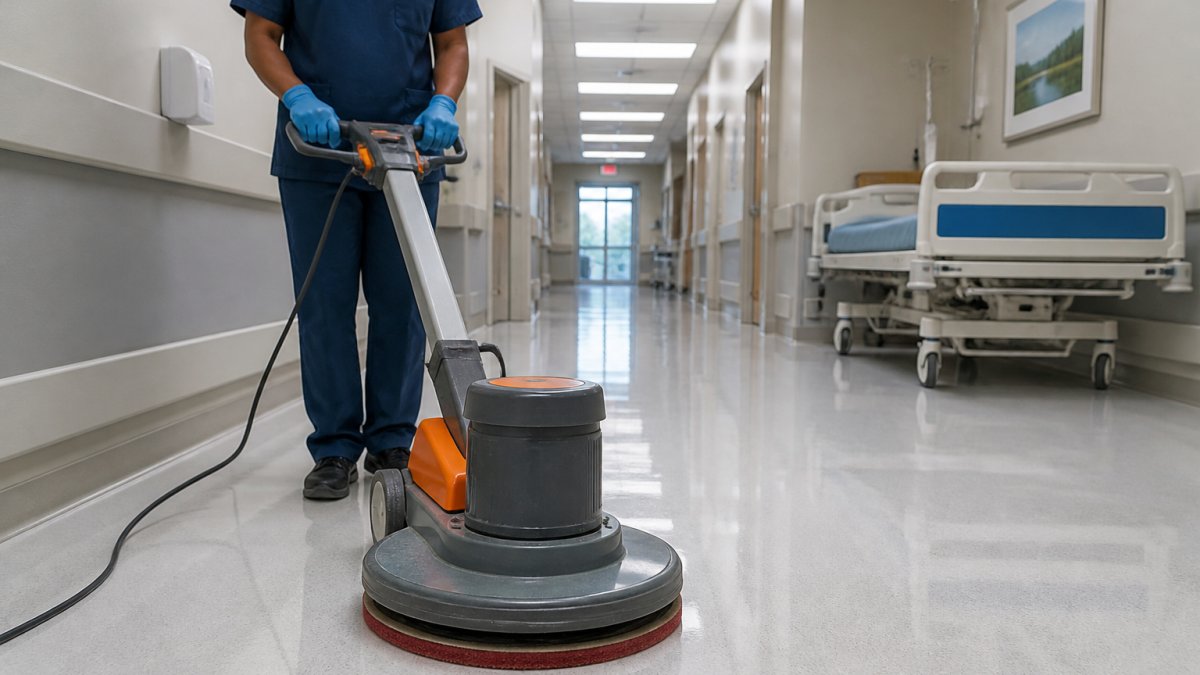
Carpet cleaning, floor stripping and waxing, and upholstery treatment extend the lifespan of your assets and require specialized equipment and trained staff. Window washing, high-dusting, and pressure washing handle areas routine cleaning misses.
Commercial Cleaning Service Frequency: Finding Your Optimal Schedule
How often should your commercial properties receive janitorial service? It depends on building size, foot traffic, industry type, and occupancy patterns.
Most office buildings benefit from nightly cleaning after business hours, which keeps workstations fresh and restrooms sanitized without disrupting staff. High-traffic lobbies and customer-facing areas may need twice-daily service.
Match your schedule to actual facility use: over-servicing wastes budget, while under-servicing damages your image and employee morale. A customized schedule balances cost-effectiveness with your cleanliness standards.
Watch Out Inconsistent cleaning schedules create visible dirt accumulation and staff frustration. Establish a fixed cleaning frequency and hold your provider accountable to it, this is where service-level agreements matter most.
Office Cleaning Checklist for Facility Managers
An office cleaning checklist ensures nothing is overlooked and holds your janitorial provider accountable. Customize it to your facility while covering all major areas.
Area | Daily Task | Weekly Task | Monthly Task |
Workstations | Dust surfaces, empty trash | Wipe keyboards/phones | Deep desk cleaning |
Restrooms | Sanitize, restock supplies | Scrub floors, mirrors | Grout/tile cleaning |
Breakroom | Wipe tables, clean sink | Degreasing, appliance wipe | Deep cabinet cleaning |
Lobbies | Vacuum, dust, empty trash | Floor polish, surface cleaning | Window washing |
Meeting Rooms | Vacuum, dust surfaces | Disinfect tables/chairs | Carpet deep clean |
Facility managers should walk their space weekly, compare conditions against the checklist, and report gaps to their provider immediately.

Understanding Office Cleaning Cost Per Square Foot
Pricing for janitorial services is usually quoted per square foot, per visit, or as a flat monthly fee, and the number depends heavily on how scope is defined. Building a cost model beats chasing a single rate, since two quotes for the same square footage can differ by 2x or more once frequency, restroom count, and floor-care scope are accounted for.
The Four Cost Drivers That Move the Number
Frequency. A nightly schedule costs more per month than a three-times-weekly one, but the per-visit price often drops because the crew is already on site. Going from three visits per week to five typically raises the monthly total, since fixed mobilization costs spread across more visits.
Restroom and breakroom count. Restrooms are the most labor-intensive square footage in any office. A building with one restroom per 10,000 square feet prices very differently from one with four. Ask providers to price restrooms as a separate line item.
Floor-care scope. Vacuuming and damp mopping are routine. Stripping and waxing VCT, extracting carpet, or burnishing stone are periodic projects usually quoted separately that can add meaningful cost in the months they occur. Confirm whether periodic floor care is bundled or billed as an add-on.
Building use and access. A secure facility requiring badging, escort, or after-hours coordination costs more than an open-plan office with a keypad. Medical, laboratory, and childcare spaces carry extra protocol and training requirements that raise labor cost.
A Simple Way to Sanity-Check a Quote
Divide the monthly price by the number of visits, then by cleanable square feet. That per-visit, per-square-foot figure lets you compare providers. A quote far below what is expected usually means restrooms, floor care, or supply restocking were excluded, while one far above usually reflects a specialized scope such as daily disinfecting, secure-facility protocols, or a high restroom-to-square-foot ratio.
Compare Itemized Quotes, Not Bottom Lines
Require the same line-item structure from every provider so comparisons are apples to apples:
Routine tasks by area (workstations, restrooms, breakroom, lobby, conference rooms)
Frequency per task (daily, weekly, monthly, quarterly)
Periodic floor care and whether it is included or quoted separately
Consumables (paper, soap, liners), included or reimbursed?
Supervision, inspections, and any quality-control visits
Emergency or on-call cleaning rates
Contract term, renewal, and termination notice
A lower bottom line often means consumables were excluded, floor care deferred, or restroom scope trimmed. Side-by-side quotes in the same structure expose those differences immediately.
Key Takeaway Do not negotiate on the bottom line alone. Negotiate on the line items. A provider that will not itemize is a provider you cannot compare, and comparison is the only way to know whether a quote is fair.
Janitorial Services Contract: Key Terms and Quality Assurance
A janitorial contract is a performance document, not a formality. Strong agreements define what "clean" means in measurable terms, how quality is verified, what happens when it slips, and what credentials the provider must maintain. Weak agreements rely on adjectives; strong ones rely on numbers, cadence, and remedies.
Service-Level Agreements and Accountability
Your contract should specify exactly what gets cleaned, how often, and to what standard. Vague language like "keep the facility clean" creates disputes. Instead, use measurable standards:
Restrooms: sanitized daily by a stated time; trash removed; dispensers restocked; floors mopped; fixtures free of visible soil on inspection.
Workstations and common areas: trash emptied daily; high-touch surfaces wiped daily; vacuuming on a stated weekly cadence.
Lobbies and entrances: spot-checked and reset at least twice daily during business hours; glass and entry doors cleaned on a stated schedule.
Breakrooms: tables and counters wiped daily; appliance exteriors wiped weekly; sink and microwave interiors cleaned on a stated cadence.
Define response times for non-routine requests: same-day for standard requests and a stated window (for example, within a few hours) for spills, restroom outages, or other urgent issues. Put the window in writing so it is enforceable.
Inspection Cadence and Escalation
Quality assurance only works if it is scheduled. Build three layers into the contract:
Provider self-inspection. The crew lead or supervisor inspects the space after each service or on a stated cadence and logs findings.
Joint walk-through. The facility manager and the provider's supervisor inspect together on a fixed schedule (weekly for high-traffic buildings, monthly for lighter ones) using the same checklist.
Scorecard review. At least quarterly, review inspection scores, missed-visit logs, and open issues against the SLA. Use the review to adjust scope, not just to assign blame.
Define an escalation path: who the facility manager contacts first, the response time at each level, and when an issue triggers a corrective action plan or termination right. Logging issues in a shared record, date, area, description, resolution, turns a dispute into a data point.
Insurance, Bonding, and Compliance Requirements
Before signing, collect and verify the provider's credentials. Ask for current certificates and confirm they are active, not expired:
General liability insurance with coverage limits appropriate to your building's value and foot traffic.
Workers' compensation insurance covering every employee who will enter your facility.
Janitorial bond or fidelity coverage protecting against theft or damage by assigned staff.
Background screening for assigned employees, including the scope of the check (criminal, employment, identity).
Training documentation for OSHA-relevant topics such as chemical handling, bloodborne pathogens where applicable, and safe use of equipment.
Ask whether the provider will name your organization as an additional insured on its liability policy and supply a certificate of insurance directly from the carrier.
Compliance with workplace safety rules and industry-specific requirements falls on the provider, but the contract should state that obligation explicitly. Healthcare, childcare, food service, and secure facilities each carry additional protocols; confirm documented training for the specific environment before work begins.
Contract Terms Worth Negotiating
Term and renewal: month-to-month, annual, or multi-year, with automatic renewal or affirmative renewal.
Termination notice: how many days' written notice either party must give.
Price adjustments: whether and how rates can change mid-term, and on what notice.
Scope changes: the process for adding or removing services without renegotiating the entire agreement.
Consumables: who supplies paper, soap, and liners, and how those costs are handled.
Key and access control: how keys, badges, and alarm codes are issued, tracked, and returned.
Watch Out Never allow a provider to begin work without a signed agreement, current certificates of insurance, and a documented scope of work. Starting service on a handshake leaves you with no remedy if quality or coverage falls short.
How to Evaluate and Select a Commercial Cleaning Provider
Selecting the right janitorial provider takes more than comparing prices. You're choosing a partner responsible for your facility's appearance and your employees' working environment.
Request references from facilities similar to yours in size, industry, and cleaning frequency. Contact at least three and ask: Does the provider show up on schedule?
Compare what's included, not just pricing, a lower quote might exclude services you assumed were covered. Ask about emergency cleaning response times, employee training programs, and complaint handling.
The best provider is one that understands your facility's unique requirements and commits to consistent, reliable service. Phaze 2 Janitorial & Labor Services offers customized cleaning specifications and flexible scheduling for recurring or one-time needs, ensuring your facility remains inspection-ready while fitting your operational requirements.
Green Cleaning and Product Safety in Commercial Facilities
Environmental responsibility and employee health increasingly matter to facility managers and staff. Green cleaning reduces chemical exposure while maintaining cleanliness standards.
Environmentally friendly products minimize toxic fumes and water pollution while working effectively on most commercial surfaces.
Discuss product choices with your provider. Some facilities require certifications like EPA Safer Choice or Green Seal; others have employee sensitivities needing fragrance-free or hypoallergenic products.
Staff training on proper product use prevents misuse and ensures safety.
Selecting the right janitorial services for commercial office buildings requires balancing quality, reliability, and cost. Whether you need recurring janitorial programs or specialized deep cleaning, professional service ensures your commercial properties remain impeccably maintained. Request a quote from Phaze 2 Janitorial & Labor Services today and discover how reliable, professional cleaning transforms your facility.
Frequently Asked Questions
What services are typically included in janitorial services for commercial office buildings?
Standard janitorial services include vacuuming carpets, dusting surfaces, sanitizing restrooms, cleaning and restocking bathrooms, emptying trash, wiping down workstations and meeting rooms, and floor care. Many providers also offer specialized services like post-construction cleanup, carpet cleaning, window washing, and deep disinfection. The exact scope depends on your facility type and service agreement with your provider.
How often should a commercial office building be cleaned?
Most commercial office buildings benefit from nightly or after-hours cleaning to maintain appearance and hygiene. High-traffic areas like lobbies and restrooms may need daily attention, while workstations and meeting rooms typically require 3-5 times weekly. Healthcare and educational facilities often require more frequent sanitizing. Your cleaning schedule should reflect foot traffic, facility type, and regulatory requirements, discuss customized frequency with your provider.
What should I look for in a janitorial services contract?
A strong contract should clearly define the scope of services, cleaning frequency, response times for issues, quality standards and inspection procedures, pricing structure and payment terms, insurance and bonding requirements, employee screening and training credentials. Request a detailed service-level agreement that holds the provider accountable and protects your facility in case of non-performance.
How do I know if a janitorial provider is reliable and trustworthy?
Verify that the provider is fully insured and bonded, has employees who are screened and trained, offers transparent pricing without hidden add-ons, provides references from similar facilities, guarantees consistent service with clear communication protocols, and has experience with your specific building type. Ask about their quality control process, response time for emergency requests, and how they handle staffing changes or scheduling disruptions.
Request a Quote
Comments